
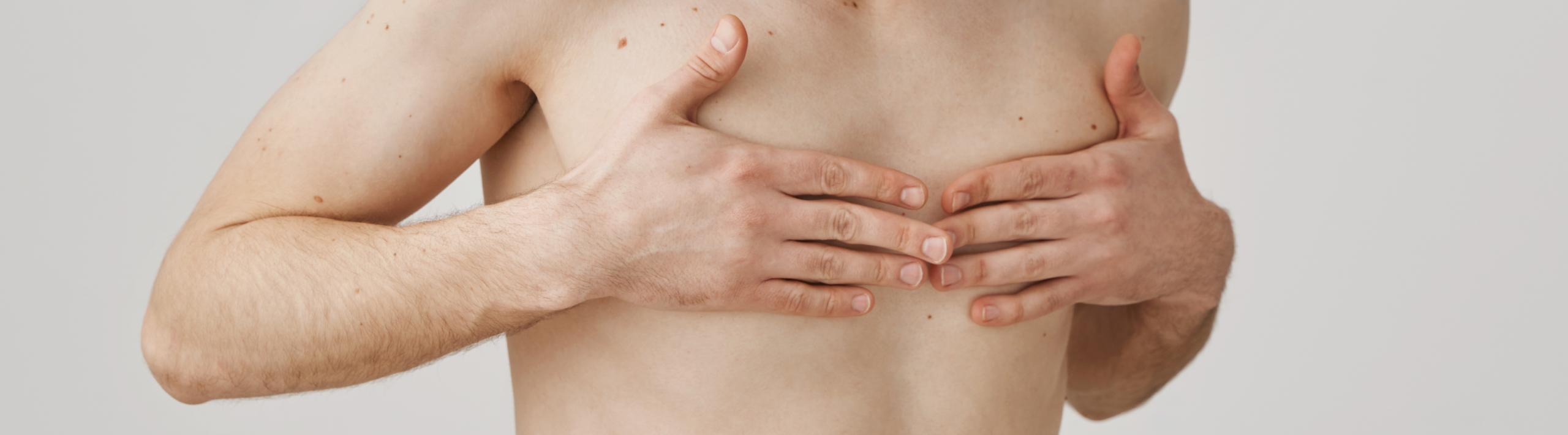

Many men considering gynaecomastia surgery wonder about the pain involved in the procedure and recovery process. Understanding what to expect can help you make an informed decision and prepare properly for treatment.
This article covers the pain levels during and after gynaecomastia surgery and practical ways to manage any pain during your recovery.
Understanding Gynaecomastia Surgery
Gynaecomastia surgery is a day procedure designed to remove excess glandular tissue, fat, or both to restore a flatter, more masculine chest contour. The surgical approach depends on the type and severity of tissue involved.
For mild to moderate cases, liposuction or minimally invasive gland excision through small incisions is often sufficient. In more advanced cases with significant tissue or loose skin, a combination of glandular tissue removal and skin excision may be required.
Gynaecomastia Surgery Pain Timeline: What You Should Know
Pain from gynaecomastia surgery is typically mild to moderate and short-lived. Here’s what to expect at each stage of the process, and the factors that can influence your experience:
During the Procedure
Surgery is performed under general anaesthesia, so you will not feel any pain. In most cases, local anaesthetic is also applied to the chest to reduce discomfort during early recovery. The procedure usually takes around 45 – 90 minutes, depending on how much tissue is removed and the technique used.
Days 1–3: Peak Discomfort
This is when soreness is most noticeable. Most patients describe it as muscle tightness or pressure, not sharp pain. Swelling and movements such as lifting your arms or getting out of bed may cause temporary discomfort. Pain medication prescribed by your surgeon usually provides good relief.
Week 1–2: Gradual Improvement
Tenderness starts to subside. You may still feel discomfort when touching the chest or making sudden movements, but overall pain levels are much lower than in the first few days.
Weeks 3–4: Minimal Discomfort
Most patients experience only occasional mild soreness, especially after physical activity. If you’ve followed post-op care instructions, discomfort should be minimal.
After 1 Month: Rare Pain
Any remaining tightness or sensitivity is typically minor and fades as healing completes.
Managing Pain During Recovery
Effective pain management supports healing and improves comfort in the days following surgery.
Take medication as prescribed: Pain relief is more effective when taken on schedule, especially in the first few days.
Use cold therapy safely: Ice packs wrapped in a cloth can reduce swelling and ease discomfort but should never be applied directly to the skin.
Wear compression garments: These reduce swelling and provide support, making movement less uncomfortable.
Sleep with your upper body elevated: Slightly raising your torso while resting helps minimise swelling and pressure in the chest area.
When to Contact Your Surgeon
Some discomfort is expected after gynaecomastia surgery, but certain symptoms may signal complications and should be reviewed promptly:
Worsening pain after initial relief: Increasing pain after the first few days may indicate infection or other issues and requires medical evaluation.
Pain with fever or discharge: Fever, redness, or fluid leakage may suggest infection and should be addressed quickly.
Sharp or unusual sensations: Occasional tingling is common, but persistent sharp or stabbing pain should be reported.
Commonly Asked Questions
Is gynaecomastia surgery painful?
Gynaecomastia surgery is performed under general anaesthesia, so you should not feel pain during the procedure. After surgery, most patients describe the recovery as manageable, with some tightness, soreness, or pressure in the chest area as the body begins to heal.
How painful is recovery after gynaecomastia surgery?
Recovery discomfort is usually most noticeable during the first few days after surgery, then gradually improves. Many patients feel more comfortable after the first week, with only mild soreness or tightness as healing continues. Pain relief medication and proper post-operative care can help make recovery more comfortable.
What does gynaecomastia surgery pain feel like?
After surgery, discomfort may feel like chest tightness, tenderness, or pressure, especially when moving the arms or getting up from bed. This is commonly part of the early healing process and usually improves as swelling settles.
How is pain managed after gynaecomastia surgery?
Pain is usually managed with prescribed medication, compression garment use, rest, and simple recovery steps recommended by the surgeon. Keeping the upper body slightly elevated and avoiding strenuous activity during early recovery can also help support comfort and healing.
How long does discomfort last after gynaecomastia surgery?
Discomfort is often most noticeable in the first few days and usually improves over the next one to two weeks. By weeks three to four, many patients experience only occasional mild soreness, especially after activity. Any remaining tightness or sensitivity usually continues to settle over time.
When should I contact my surgeon about pain after surgery?
Some discomfort is expected during early recovery, but you should contact your surgeon if the pain feels unusual, becomes stronger, or does not improve as expected. It is also best to seek guidance if discomfort is accompanied by redness, fever, fluid discharge, or increasing swelling.
Conclusion
Discomfort after gynaecomastia surgery is typically manageable with proper pain control and rest. Discuss your pain management options and recovery expectations with a qualified plastic surgeon to make an informed treatment decision.
