
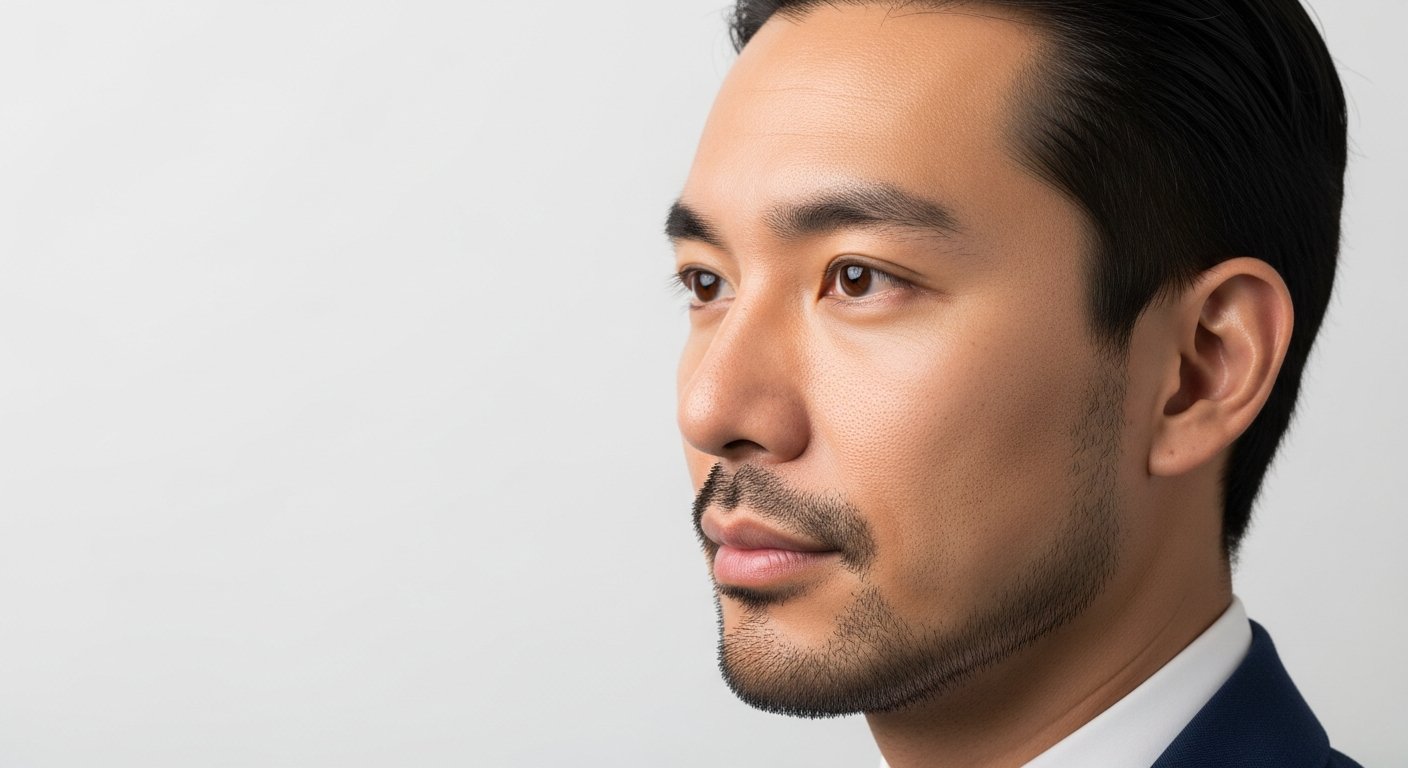

Male nasal skin is significantly thicker than female nasal skin, which fundamentally influences the surgical approach and the final visible outcome. This anatomical difference, combined with distinct structural characteristics and specific aesthetic goals, makes male rhinoplasty a specialised field. It requires techniques designed to preserve masculine features and maintain a strong profile while addressing both functional concerns and aesthetic refinement.
Understanding Male Nasal Anatomy
Male noses typically have distinct structural characteristics:
- Thicker skin with more sebaceous glands
- Stronger, more prominent nasal bones
- Broader nasal base and nostrils
- More acute nasofrontal angle (90-95 degrees)
- Straighter nasal bridge profile
These anatomical differences require specialised surgical techniques to achieve natural-looking results that maintain masculine proportions.
Common Concerns in Male Rhinoplasty
Functional Issues
Many men seek rhinoplasty to address breathing difficulties caused by:
- Deviated septum
- Nasal valve collapse
- Turbinate hypertrophy
- Previous nasal trauma
Aesthetic Goals
Men typically request:
- Dorsal hump reduction
- Nasal tip refinement
- Correction of asymmetry
- Post-traumatic deformity correction
- Ethnic feature preservation
Surgical Techniques for Male Rhinoplasty
Dorsal Hump Reduction
Removing a dorsal hump while maintaining a straight, masculine profile requires precise technique:
- Conservative bone removal to avoid over-feminisation
- Preservation of adequate dorsal height
- Smooth transition from radix to tip
- Maintenance of the nasofrontal angle
Nasal Tip Refinement
Male nasal tip work focuses on strength rather than delicacy:
- Subtle tip definition without excessive rotation
- Preservation of tip projection
- Maintenance of a broader tip base
- Avoidance of overly narrow or pinched appearance
Septoplasty Integration
Functional improvements are often combined with aesthetic changes:
- Straightening of the deviated septum
- Improvement of the nasal airway
- Use of septal cartilage for structural support
- Correction of internal valve dysfunction
Ethnic Rhinoplasty Considerations
For Asian, Middle Eastern, and other ethnic groups, techniques preserve cultural identity:
- Maintenance of ethnic nasal characteristics
- Augmentation using cartilage grafts or implants
- Tip projection enhancement
- Bridge augmentation when desired
Open vs. Closed Approach
Open Rhinoplasty
Advantages for male patients:
- Visualisation of nasal structures
- Precise cartilage manipulation
- Control for complex cases
- Easier placement of grafts
The columellar scar typically heals well and becomes virtually invisible.
Closed Rhinoplasty
Benefits include:
- No external scarring
- Less postoperative swelling
- Shorter operative time
- Suitable for minor corrections
Cartilage Grafting Techniques
Male rhinoplasty often requires structural support:
Spreader Grafts
- Widen the internal nasal valve
- Straighten twisted septum
- Maintain middle vault width
Tip Grafts
- Shield grafts for tip projection
- Cap grafts for tip definition
- Alar rim grafts for nostril support
Dorsal Grafts
- Camouflage irregularities
- Augment the low nasal bridge
- Create a smooth dorsal line
Managing Thick Nasal Skin
Male patients often have thicker skin, which affects:
Surgical Planning
- More cartilage reshaping may be needed
- Skin won’t drape as tightly over the new framework
- Subtle changes may not be visible
- Longer healing time for swelling resolution
Technique Modifications
- Strategic thinning of soft tissue envelope
- Enhanced structural support
- Conservative tip work
- Realistic expectation setting
Recovery Considerations for Men
Timeline
- Splint removal: 5-7 days
- Return to desk work: 1-2 weeks
- Return to exercise: 4-6 weeks
- Final results: 12-18 months
Specific Concerns
Men may experience:
- More bruising due to thicker skin
- Longer swelling resolution
- Temporary breathing changes
- Need for activity modification
Revision Rhinoplasty in Males
Secondary procedures may be needed for:
- Unsatisfactory primary results
- Breathing problems post-surgery
- Trauma after initial surgery
- Natural ageing changes
Revision surgery is more complex due to:
- Scar tissue formation
- Limited cartilage availability
- Altered anatomy
- Thicker, less pliable skin
Choosing the Right Surgeon
Look for:
- Experience in male rhinoplasty
- Understanding of masculine aesthetics
- Portfolio of male patient results
- Functional and aesthetic expertise
- Board certification in plastic surgery or ENT
Consultation Process
Initial Assessment
Your surgeon will evaluate:
- Nasal anatomy and skin type
- Breathing function
- Facial proportions
- Aesthetic goals
- Medical history
Surgical Planning
Discussion should cover:
- Realistic expectations
- Surgical approach
- Potential risks
- Recovery timeline
- Cost considerations
Combining Procedures
Male rhinoplasty can be performed with:
- Chin augmentation for profile balance
- Septoplasty for breathing improvement
- Turbinate reduction
- Sinus surgery if needed
Long-term Results
Well-performed male rhinoplasty should:
- Maintain a masculine appearance
- Improve breathing function
- Look natural and unoperated
- Age naturally with the face
- Preserve ethnic characteristics
Potential Complications
While rare, risks include:
- Bleeding
- Infection
- Scarring
- Asymmetry
- Breathing difficulties
- Need for revision surgery
Choosing a qualified plastic surgeon minimises these risks.
Cost Considerations
Male rhinoplasty costs vary based on:
- Surgical complexity
- Surgeon’s experience
- Facility fees
- Anesthesia costs
- Geographic location
To help you further develop this content while maintaining compliance, here are five commonly asked questions that were not fully addressed in the original text:
Commonly Asked Questions
Will my nose look “fake” or “over-rotated” after surgery?
Many male patients fear a “surgical” look or a nose that appears too “turned up” (feminised). This question addresses the specific surgical goal of maintaining a masculine nasolabial angle. In men, the ideal angle between the nose and the upper lip is typically 90 to 95 degrees, whereas in women, a higher rotation is often preferred.
Can I still play contact sports or go to the gym after the procedure?
Since the content mentions a “return to exercise,” patients often ask for specifics about high-impact activities such as rugby, soccer, or heavy weightlifting. This question allows discussion of the nose’s structural integrity during the healing phase and the timeline for when the nasal bones are fully set.
How does thicker male skin affect the “definition” of the nasal tip?
While the text mentions thick skin, patients often ask why they can’t achieve a “sharp” or “chiselled” tip. This is a crucial expectation-management question. It explains that because male skin is thicker and has more sebaceous glands, it does not “shrink-wrap” over the underlying cartilage as tightly as thinner skin, resulting in a softer, more natural definition rather than a sharp point.
Will I have to have my nose “broken” during the surgery?
“Breaking the nose” (osteotomy) is a common fear. This question addresses when an osteotomy is clinically necessary—such as to narrow a very wide bridge or straighten a severe deviation—versus when refinement can be achieved through cartilage grafting alone.
Does male rhinoplasty affect facial hair growth or shaving?
Because the “open” approach involves a small incision on the columella (the tissue between the nostrils), men often ask whether this affects moustache growth or whether they need to change their shaving routine during recovery. This is a practical, gender-specific concern regarding post-operative grooming and scar care.
Next Steps
Male rhinoplasty requires specialised techniques that preserve masculine aesthetics while addressing functional concerns. Success depends on selecting a surgeon specialising in male nasal anatomy and understanding how thicker skin, stronger cartilage, and different aesthetic goals require modified approaches compared to female rhinoplasty.
If you’re experiencing breathing difficulties, nasal asymmetry, or dissatisfaction with your nasal appearance, schedule a consultation with a plastic surgeon specialising in male rhinoplasty to discuss your specific concerns and treatment options.
