
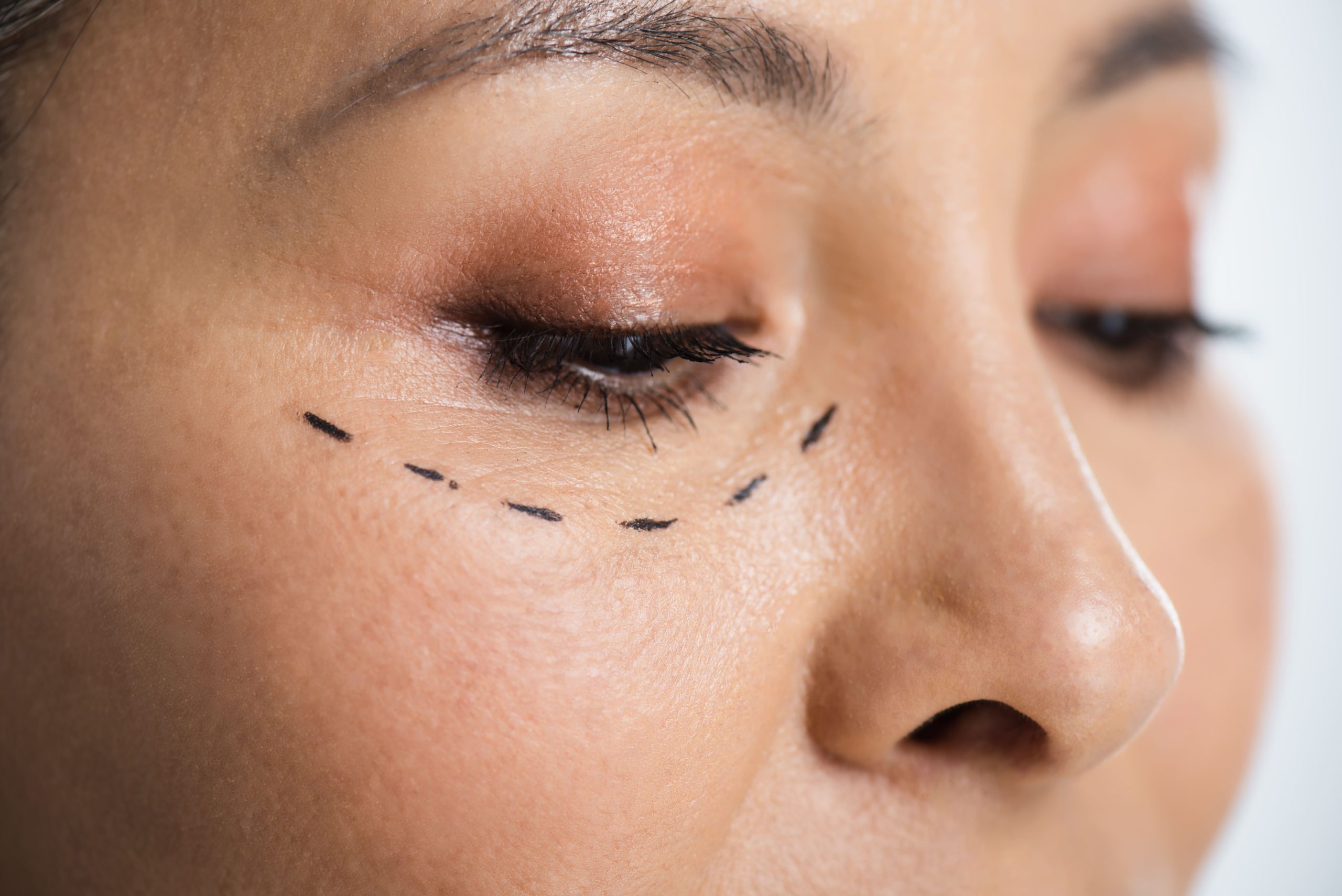

Drooping upper eyelids and puffy lower eye bags frequently coexist due to age-related changes, genetics, and tissue laxity. In suitable candidates, combining ptosis repair with lower blepharoplasty in a single procedure can address both the upper eyelid opening and lower eyelid contour, while reducing the need for separate recovery periods compared with staged surgery. In Asian eyelid surgery, this must be planned carefully together with crease height, skin redundancy, brow position, and eyelid fold anatomy. Over-elevating the crease or removing too much skin can make the eyelids look swollen, hollow, or unnatural. For patients with both upper eyelid drooping and lower eye bags, the goal is not simply to make the eyes bigger, but to restore a more rested and balanced appearance while preserving natural eyelid proportions and ethnic eyelid characteristics.
Understanding Ptosis
Ptosis refers specifically to the drooping of the upper eyelid margin, which is clinically distinct from dermatochalasis, or excess upper eyelid skin. The levator palpebrae superioris muscle elevates the upper lid, and its gradual weakening or separation from the tarsal plate can cause the lid margin to sit lower than its typical position. A normal MRD1 (the distance from the corneal light reflex to the upper lid margin) generally measures approximately 4 to 5 mm, and values below this range typically suggest varying degrees of ptosis.
Assessing Ptosis Severity
Clinical evaluation allows surgeons to precisely measure eyelid position and muscle strength before planning surgery. It is critical to differentiate true muscle weakness from simple excess skin to ensure the correct surgical technique is selected.
Marginal Reflex Distance (MRD1):
Measurements evaluate the distance from the corneal light reflex to the upper lid margin. A normal MRD1 is approximately 4 to 5 mm. Values of 3 to 4 mm generally suggest mild ptosis, 2 to 3 mm moderate ptosis, and 0 to 2 mm severe ptosis, though individual variation applies.
Levator Function Testing:
This test measures total eyelid excursion from downgaze to upgaze while stabilising the brow. Measurements of 8 mm or greater are typically classified as good to excellent function, while values below 5 mm suggest poor function that may require a different surgical approach.
Dermatochalasis Distinction:
Identifying concurrent excess upper eyelid skin is necessary because removing excess skin alone without correcting underlying levator muscle weakness will not resolve a low-set lid margin.
Eye Bags: Anatomy and Contributing Factors
Lower under-eye bags are typically caused by structural changes in the delicate facial tissues around the orbit. Over time, natural structural shifts and volume loss can make these changes much more noticeable.
Orbital Septum Weakening:
As this structural membrane naturally weakens with age, the underlying medial, central, and lateral fat pads can prolapse forward to create a puffy appearance.
Midface Volume Loss:
Deepening of the tear trough and downward migration of cheek fat can create hollows and shadows that further emphasise the appearance of lower lid bags.
Surgical Management Options:
Lower blepharoplasty is designed to address these structural issues through precise fat removal, fat repositioning, or targeted skin excision based on individual anatomy.
Why Combine Both Procedures
Addressing the upper and lower eyelids together allows the surgeon to treat the periorbital area as a single, cohesive unit. This integrated approach can provide practical advantages for patients who are suitable candidates for both surgeries.
- Single Recovery Period: Combining the procedures is often designed to streamline the healing process, which may allow suitable candidates to navigate a synchronised recovery timeline rather than undergoing entirely separate healing phases for each condition.
- Unified Surgical Calibration: Performing both repairs simultaneously allows the surgeon to balance upper lid elevation with lower lid fat management, aiming for a more proportional overall outcome.
- Dynamic Volume Assessment: Simultaneous surgery assists the surgeon in managing real-time tissue tension changes, as alterations in lower lid volume can sometimes influence upper lid positioning.
Who Benefits From Combining Ptosis Surgery and Eye Bag Surgery?
Combined surgery may be considered when a patient has both a low upper eyelid margin and lower eyelid fat prolapse or tear trough hollowing. It may be less suitable if dry eye is significant, lower lid laxity is present, thyroid eye disease is active, or the main concern is brow descent rather than eyelid ptosis.
When Should These Procedures Be Staged Instead
In some patients, staging may be safer or more predictable. This may apply when there is significant asymmetry, previous eyelid surgery, dry eye, lower lid laxity, thyroid eye disease, or when the diagnosis is uncertain. Staging allows the upper eyelid position to settle before deciding how much lower eyelid correction is appropriate.
Surgical Techniques for Ptosis Repair
The approach to ptosis correction depends on levator function, ptosis severity, and patient anatomy. External levator advancement is a commonly used technique for age-related ptosis with good levator function. Through an upper eyelid crease incision, the surgeon identifies the levator aponeurosis, which is the tendinous extension of the levator muscle, and reattaches or advances it on the tarsal plate to elevate the lid margin.
Muller’s muscle-conjunctival resection (MMCR) approaches the ptosis from inside the eyelid, removing a portion of Muller’s muscle and conjunctiva to achieve lift. This technique is generally suitable for patients with mild to moderate ptosis and a good response to phenylephrine testing, which temporarily stimulates Müller’s muscle to predict surgical outcomes.
For severe ptosis with poor levator function, frontalis suspension connects the eyelid to the forehead muscle using suture material or fascia, allowing brow elevation to lift the lid. This technique is less common in age-related ptosis but may be necessary when levator muscle function is significantly compromised.
Lower Blepharoplasty Approaches
Transcutaneous lower blepharoplasty uses an incision just below the lash line, providing direct access to herniated fat compartments and allowing skin excision. This approach suits patients with significant skin redundancy requiring removal alongside fat management.
Transconjunctival lower blepharoplasty places the incision inside the lower eyelid, avoiding an external skin incision. Fat can be removed or repositioned through this approach, making it appropriate for patients with fat prolapse but minimal skin excess.
Fat repositioning is an option utilised in lower blepharoplasty for specific patient profiles. Rather than excising herniated fat, surgeons release and redrape it over the orbital rim into the tear trough, aiming to smooth the lid-cheek junction and manage the risk of hollowing that can follow over-resection. The most appropriate technique depends on individual anatomy and the surgeon’s assessment.
When skin tightening is needed alongside transconjunctival fat management, adjunctive procedures like laser resurfacing or chemical peels may help address surface texture and mild laxity without external incisions.
Candidacy Assessment
Comprehensive preoperative evaluation helps determine suitability for combined surgery. Ocular surface health affects healing and postoperative comfort. Patients with significant dry eye may require optimisation before surgery or modified surgical plans to avoid exacerbating symptoms.
Visual field testing documents functional impairment from ptosis. Photographs in multiple gaze positions record baseline asymmetry and guide surgical planning discussions.
Medical history review identifies conditions affecting healing or surgical risk. Bleeding disorders, autoimmune conditions affecting the eyes, and previous eyelid surgery all influence approach selection and outcome expectations. Thyroid eye disease requires stable measurements before cosmetic eyelid surgery, as active disease causes fluctuating lid positions.
⚠️ Important Note: Patients using blood-thinning medications or supplements require specific preoperative instructions. Aspirin, fish oil, vitamin E, and certain herbal preparations increase bruising risk and may need temporary cessation before surgery. Please discuss all current medications and supplements with your surgeon during the consultation.
Recovery Timeline and Expectations
The recovery process after combined eyelid surgery depends heavily on individual healing rates and the specific surgical approaches used. Understanding general post-operative phases can help suitable candidates plan their rest and daily activities appropriately.
- Early Swelling and Bruising: The first week typically involves the most noticeable swelling and bruising, which can be managed with cold compresses, head elevation, and limited physical activity as advised by your surgeon.
- Suture and Incision Care: If external sutures are placed in the upper lid crease, they generally dissolve or are removed within one to two weeks, whereas internal transconjunctival incisions typically require no external suture maintenance.
- Gradual Return to Daily Routine: Many patients feel comfortable returning to light desk work within one to two weeks, though strenuous exercise, heavy lifting, and bending forward should generally be avoided for a few weeks to minimise blood pressure spikes and orbital congestion.
Long-Term Healing
Final results emerge over several months as tissues settle and scars mature. Upper lid crease incisions typically heal within the natural eyelid fold. Subtle asymmetries may appear during healing as each side recovers at slightly different rates, often equalising as swelling continues to resolve over the following months.
While the structural alterations from ptosis repair and lower blepharoplasty are intended to be long-lasting, individual results vary. The periorbital tissues remain subject to the natural, ongoing effects of facial ageing and volume changes.
Potential Complications and Management
As with any surgical intervention, combined eyelid surgery carries potential risks and complications. A transparent overview helps patients monitor their recovery and discuss any concerns with their surgeon.
- Asymmetry and Correction Variations: Mild asymmetry can occur during the healing phase due to uneven swelling. Persistent issues may lead to undercorrection, where the lid remains low, or overcorrection, which can sometimes cause lagophthalmos, or incomplete eyelid closure.
- Lower Lid Malposition: Excessive skin removal or inadequate tissue support can potentially lead to conditions such as ectropion, which is an outward turning of the lower lid, or increased scleral show.
- Temporary Dry Eye Symptoms: Changes to blink mechanics and tear distribution during early recovery may temporarily induce or worsen dry eye symptoms, which are typically managed using preservative-free artificial tears.
When to Seek Professional Help
- Sudden vision changes or loss affecting one or both eyes
- Severe pain uncontrolled by prescribed medication
- Rapidly increasing swelling or firmness, suggesting haematoma
- Signs of infection, including increasing redness, warmth, or discharge
- Inability to close the eyes completely, causing corneal exposure symptoms
- Persistent double vision beyond the immediate postoperative period
Commonly Asked Questions
Is It Really Ptosis, Excess Skin, or Brow Descent?
Some patients feel their eyes look tired because the upper eyelid margin is low. Others have excess eyelid skin, brow descent, or hollowing around the eyes. These problems can look similar in photographs but require different surgical plans. This is why assessment of MRD1, levator function, brow position, eyelid crease height, and lower eyelid contour is important before deciding whether surgery should involve the upper lids, lower lids, or both.
How long does combined eyelid surgery take?
Combined ptosis repair and lower blepharoplasty typically requires two to three hours, depending on technique complexity and whether additional procedures are included. The surgery is performed as a day procedure under local anaesthesia with sedation or general anaesthesia based on patient preference and surgeon recommendation.
Will my scars be visible after healing?
Upper eyelid incisions hide within the natural crease and may become difficult to notice once mature in many patients. Transconjunctival lower blepharoplasty leaves no external scars, while transcutaneous incisions placed just below the lash line typically heal inconspicuously, though individual scarring outcomes vary.
Can ptosis return after surgery?
Recurrence is possible, particularly many years after initial repair, as aging continues to affect levator muscle function. The rate of recurrence varies with surgical technique and individual healing characteristics. Many patients maintain improved lid position for extended periods.
What anaesthesia is used for combined surgery?
Options include local anaesthesia with sedation or general anaesthesia. Many patients prefer sedation for comfort during a procedure involving both upper and lower lids, though some choose to remain awake with local anaesthesia alone.
When can I wear contact lenses again after surgery?
Many surgeons recommend waiting two to three weeks before resuming contact lens wear, allowing incisions to heal and swelling to subside sufficiently for comfortable lens insertion and removal. Individual recovery timelines vary.
Next Steps
Accurate diagnosis, distinguishing true ptosis from excess skin, is essential to technique selection and determines whether levator advancement, MMCR, or an alternative approach is appropriate. Combining ptosis repair with lower blepharoplasty in a single procedure aims to minimise the total number of individual recovery phases and is designed to help the surgeon balance upper and lower lid modifications simultaneously. Final results typically take several months to fully emerge as swelling resolves and scars mature.
If you are experiencing drooping upper eyelids that affect your vision or persistent under-eye bags, a consultation with an accredited plastic surgeon registered with Singapore’s medical regulatory authority can help determine your clinical eligibility for these procedures.
