C-Section Scar Revision in Singapore

Last Reviewed: 23 Sept 2026

For mothers planning an elective caesarean delivery, or those who want to address an existing C-section scar, clinical assessment by a qualified plastic surgeon can help determine what is possible and what the process involves.

C-section scar revision may help improve scar appearance, comfort, and contour for suitable patients, subject to individual assessment. Scar-conscious closure planning for a scheduled caesarean delivery may also be discussed in advance with suitable patients, in coordination with their obstetrician.

doctor img
Dr Terence Goh

MBBS

MMed

MRCS

FAMS

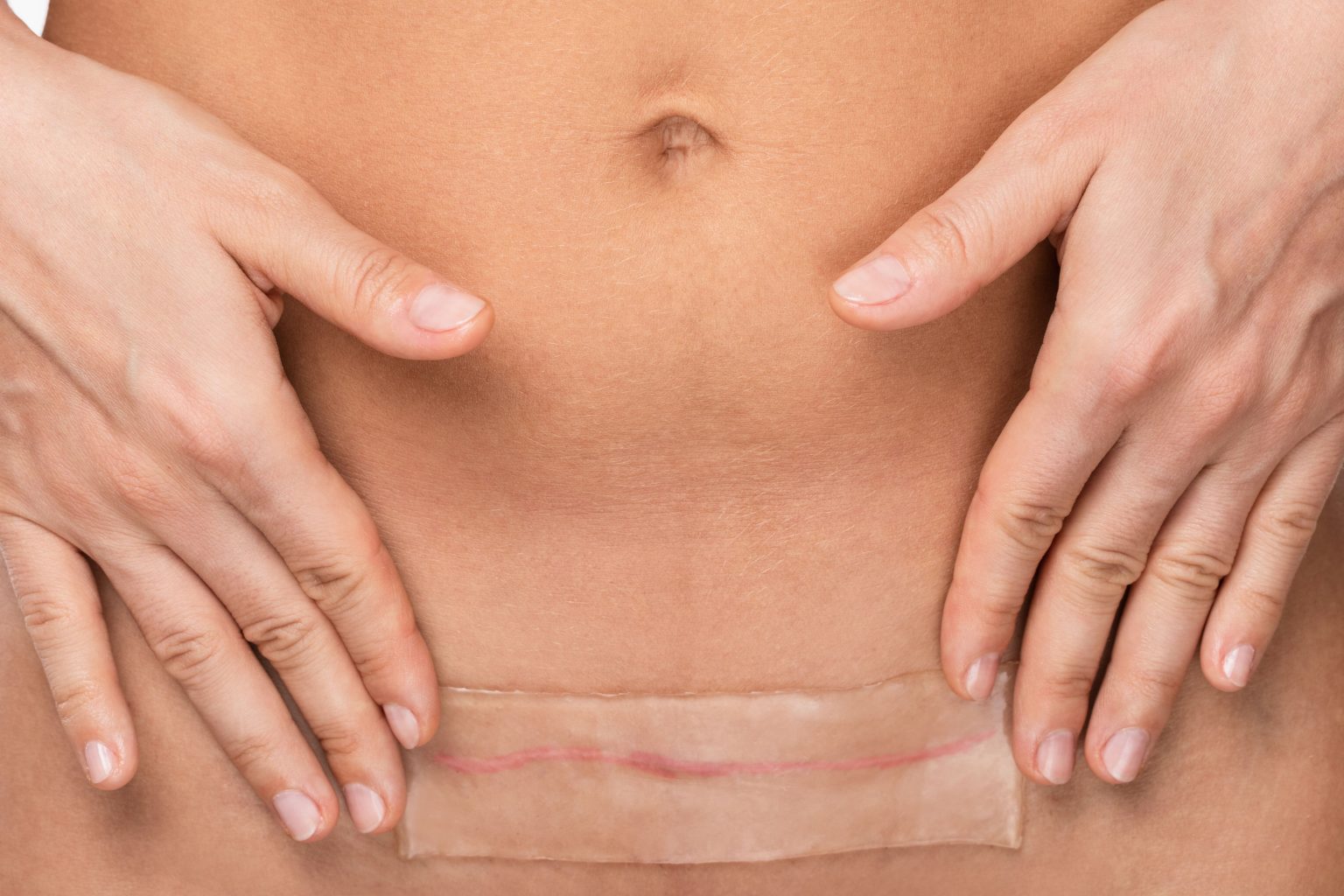
A close-up image of a postpartum belly showing a visible cesarean scar, with a woman's hand resting gently on her abdomen. A close-up image of a postpartum belly showing a visible cesarean scar, with a woman's hand resting gently on her abdomen.

Which C-Section Scar Concern Applies to You?

  • I am planning a private or elective C-section.

    If you are scheduling a caesarean delivery, you may wish to discuss scar-conscious closure planning before your delivery date. Enquiring early, while you are still in the planning stage with your obstetrician, allows time to assess feasibility, coordinate logistics, and discuss what is realistically achievable for your skin type and healing history. This pathway is available for suitable patients with a scheduled, planned delivery.

  • I already have a C-section scar I want to improve.

    If your existing scar is raised, wide, tethered, uncomfortable, or simply not how you want it to look, a specialist assessment can help identify what type of scar you have, what may be causing your concern, and which treatment options, surgical or non-surgical, may be appropriate.

  • Is It a Scar Problem or a C-Section Pouch?

    Some patients are concerned mainly about the scar itself — for example, a raised, widened, dark, itchy, or painful scar. Others are concerned about the lower abdominal shape around the scar, such as an indentation, fold, overhang, or “C-section pouch.” This distinction matters because scar revision improves the scar line, but it may not fully correct loose skin, excess fat, or abdominal wall weakness. In these cases, procedures such as liposuction, mini tummy tuck, full tummy tuck, or mummy makeover surgery may need to be discussed separately.

The right pathway for each patient depends on scar type, medical history, pregnancy plans, and clinical examination. Both pathways begin with a consultation.

Not sure which applies to you?

Start with a consultation.

Ready for Natural Looking Results?

Table of Concerns

Concern Possible Cause Treatment Direction
Raised, thick, itchy scar Hypertrophic or keloid-prone scar Silicone, steroid injection, laser, scar care
Wide scar Skin tension or stretched scar Surgical scar revision
Indented scar Scar tethering to deeper tissue Scar release and revision
Fold above scar Loose skin or fat Mini tummy tuck / tummy tuck / liposuction
Bulging abdomen Muscle separation or fat Abdominoplasty / body contouring assessment

Common Types of C-Section Scars

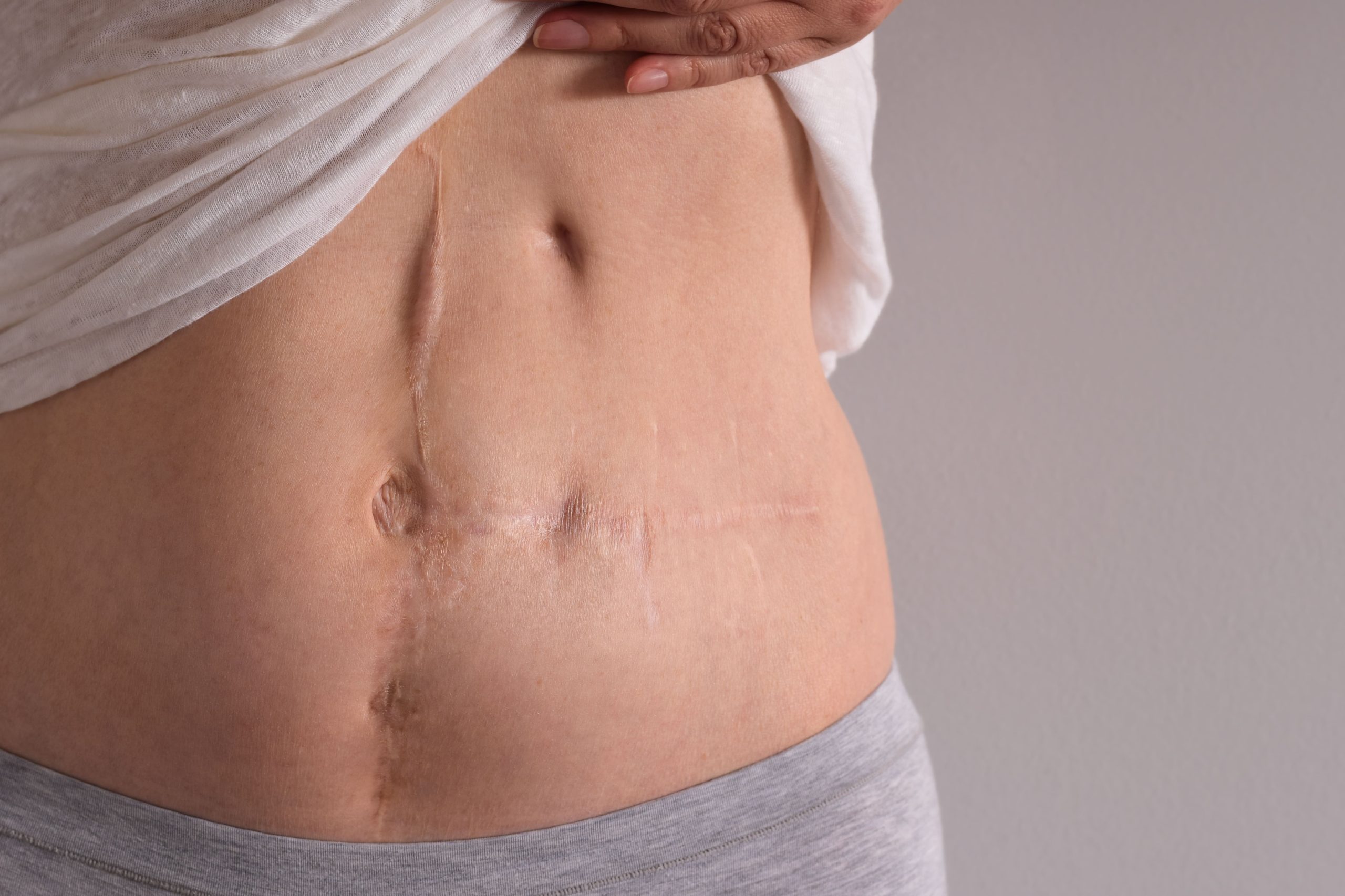
A close-up view of a woman's abdomen showing a surgical scar below the belly button.

Raised or thick scar

A scar that sits above the surrounding skin and may feel firm, itchy, or tender.

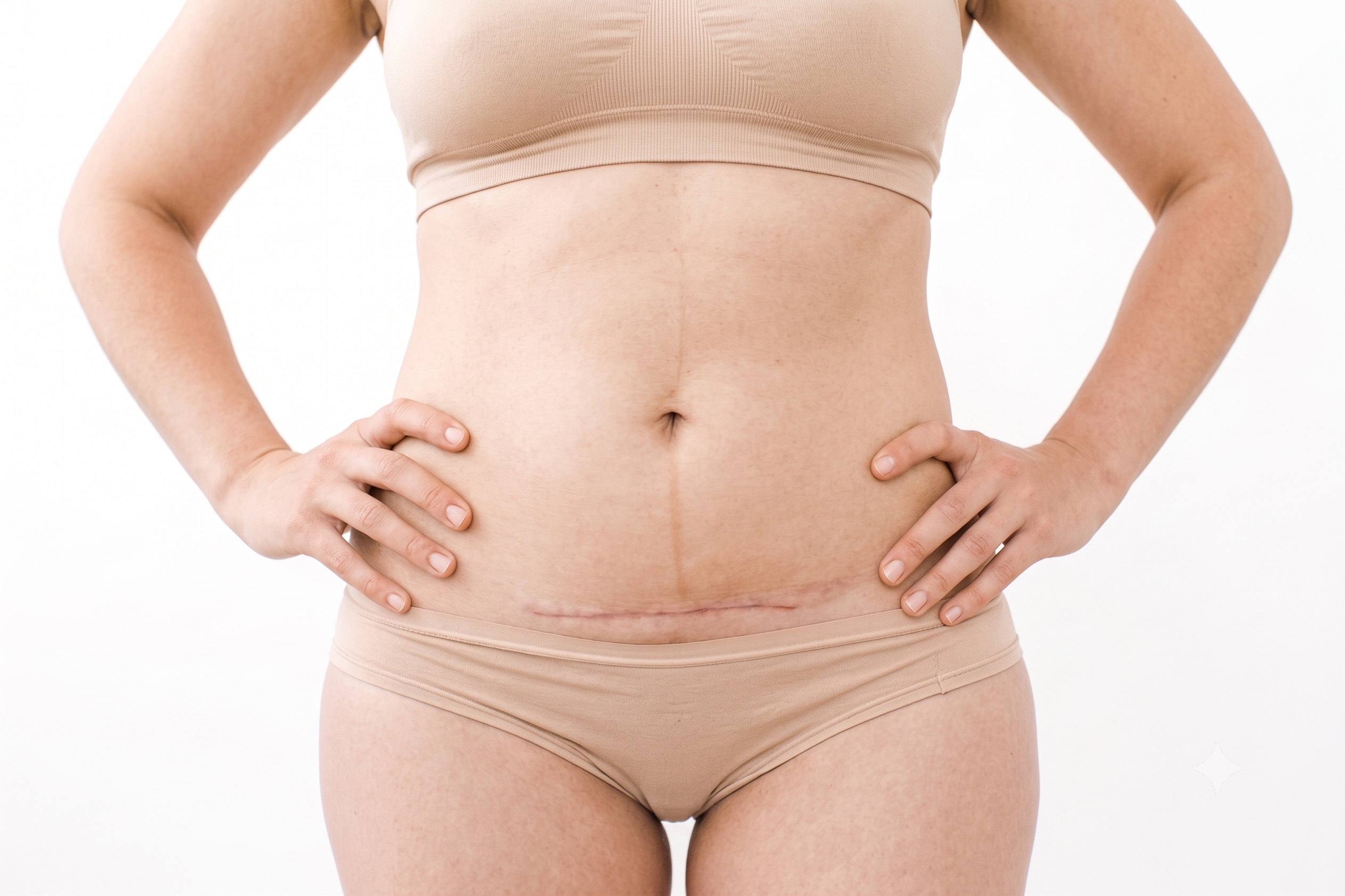
A close-up view of a female abdomen displaying abdominal scars, highlighting body positivity.

Widened scar

A scar that has stretched beyond the original incision line.

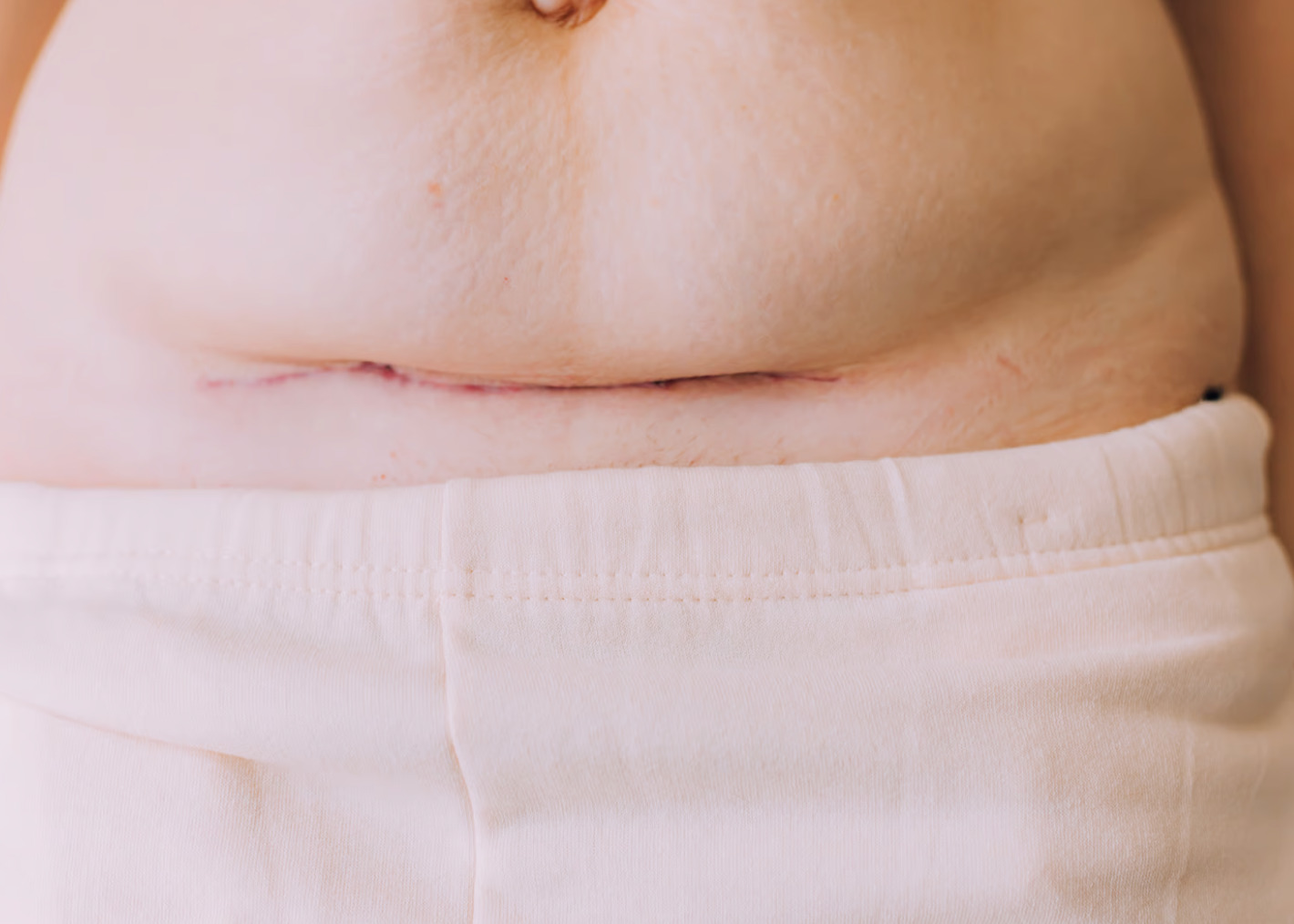
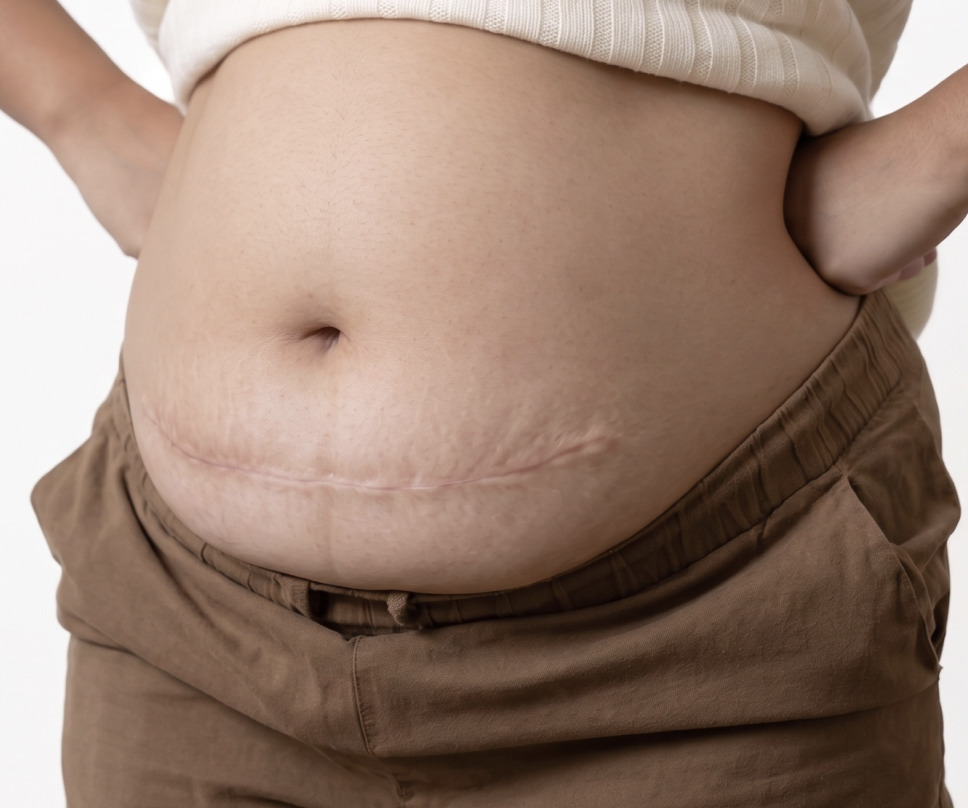
A close-up of a woman's abdomen showing a noticeable scar.

Tethered or indented scar

A scar that appears pulled inwards because the skin is attached to deeper tissue.

A close-up of a person's abdomen showing a surgical scar and surrounding skin.

Pigmented scar

A scar that remains darker or more visible than the surrounding skin.

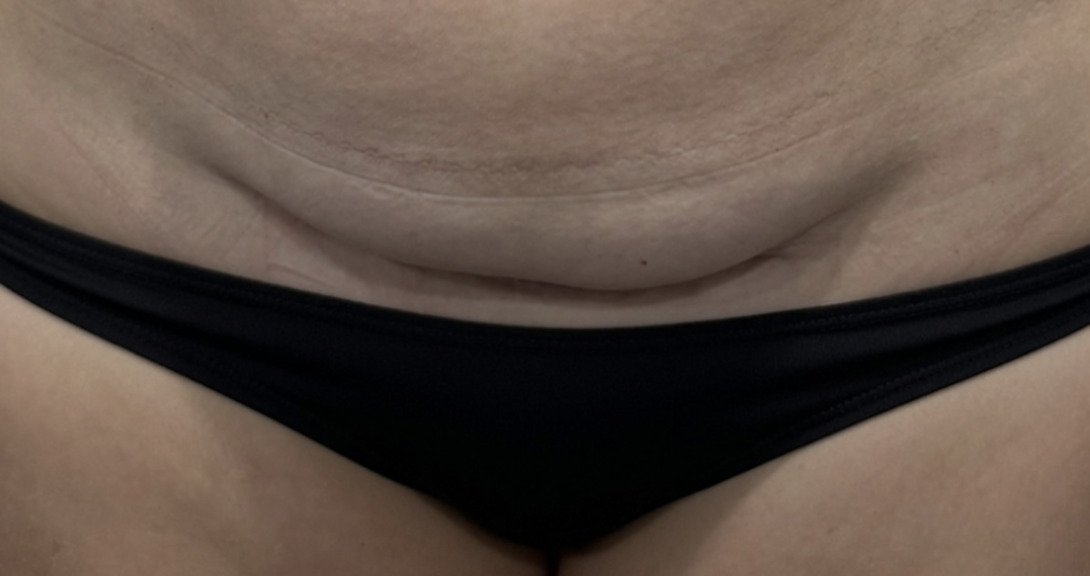
A close-up view of a person's abdominal area showing skin texture and a black bikini.

C-section pouch or overhang

A fold of skin or fat above the scar. This may not be corrected by scar revision alone.

What Is C-Section Scar Revision?

C-section scar revision is a clinical intervention designed to improve the appearance, texture, or comfort of a caesarean scar. It may involve the surgical removal and re-closure of problematic scar tissue, or non-surgical approaches to support gradual scar softening and maturation.

The most important expectation to set at the outset: scar revision does not remove a scar. The aim is to produce a scar that is less prominent, more comfortable, and better integrated with the surrounding skin — for suitable patients, based on individual assessment.

Treatment goals may include reducing scar width, height, or firmness; improving skin texture and colour; releasing tethering to deeper tissue layers; or reducing tenderness and itch where these are present.

A consultation can help determine whether surgical revision, non-surgical scar care, or monitoring is the most appropriate next step for your specific scar.

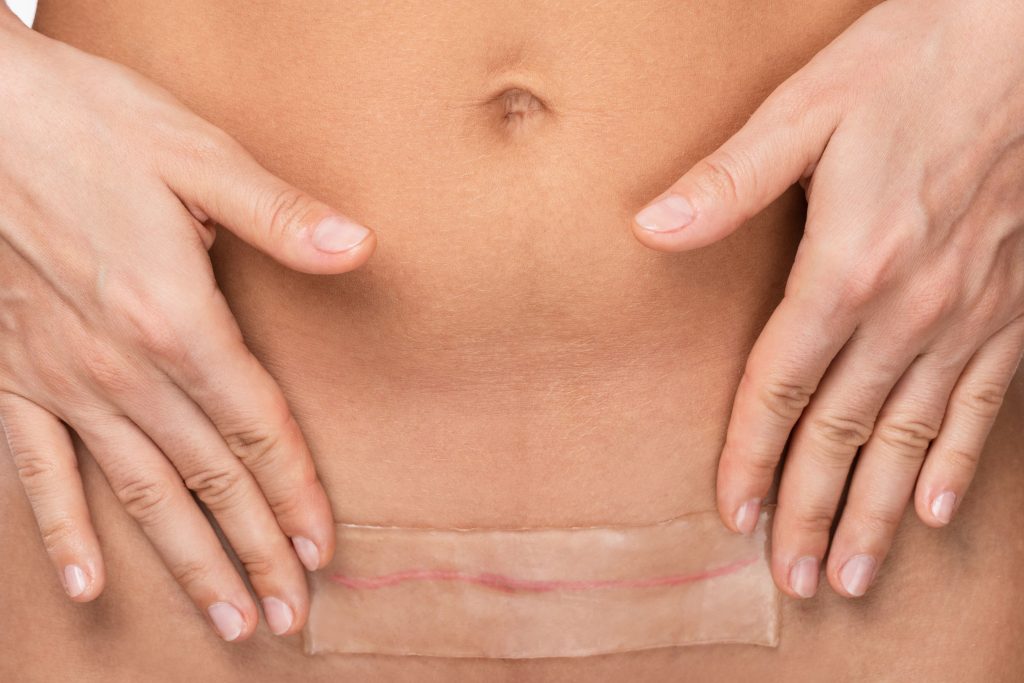
Close-up of an abdomen with a scar and an adhesive bandage. Close-up of an abdomen with a scar and an adhesive bandage.

C-Section Scar Concerns That May Be Assessed

The following are among the scar concerns that may be assessed during a specialist consultation:

  • Raised or thickened scars sitting above the surrounding skin
  • Wide scars that have spread beyond the original incision line
  • Keloid-prone or actively enlarging scars
  • Itchy or tender scars causing ongoing discomfort
  • Tethered or indented scars where tissue has adhered to deeper layers
  • Uneven, puckered, or irregular contour
  • Persistent redness, darkening, or pigmentation changes
  • Scars that are poorly concealed under clothing or swimwear

Some of these concerns may respond to non-surgical C-section scar treatment. Others may require surgical revision or a staged approach. Suitability is determined by assessment.

Note: New redness, discharge, fever, wound separation, or worsening pain following a recent C-section should be assessed promptly by your obstetric team — these are active wound concerns, not aesthetic scar concerns suitable for plastic surgery consultation at this stage.

When Scar Revision Alone May Not Be Enough

Scar revision is most useful when the concern is the scar itself. However, if the main issue is a lower abdominal fold, loose skin, excess fat, or abdominal wall separation after pregnancy, revising the scar alone may not create the desired improvement.

In these cases, the consultation may include discussion of abdominal contouring options such as liposuction, mini tummy tuck, full tummy tuck, or mummy makeover surgery. This does not mean every patient needs a larger procedure, but it helps ensure that the treatment matches the actual cause of the concern.

Elective C-Section Scar Closure Planning

For mothers planning a private or scheduled caesarean delivery who want to be proactive about their scar outcome, discussing scar-conscious closure in advance is an option worth considering early in your planning.

This is not a guarantee of a specific scar result — individual healing biology plays a significant role in how any wound heals, and no surgical technique can override this entirely. What advance planning can offer is a thoughtful approach to wound closure: discussing layered tissue handling, incision placement, wound tension management, your skin type and scarring history, and post-delivery scar management before the delivery date arrives.

How the coordination works:

The obstetrician remains fully responsible for your care and your baby’s care during delivery. Plastic surgery involvement, where appropriate, requires advance arrangement with both your obstetric team and the hospital. Not every hospital or birth setting will accommodate this arrangement, which is why early enquiry is important — ideally while you are still in the early stages of planning your delivery with your obstetrician.

The right time to enquire:

Once you have confirmed you are pursuing a planned or private caesarean delivery and are beginning to discuss hospital arrangements with your obstetrician, that is the appropriate point to enquire about scar closure planning. Early enquiry is recommended, as it allows time to assess feasibility, logistics, and suitability.

If a planned C-section becomes urgent or emergency:

Maternal and baby safety takes absolute priority. Any pre-arranged scar closure planning may not be possible under emergency circumstances, regardless of prior arrangements. This is an important practical reality to understand and accept before any arrangement is confirmed.

Revision of an Existing C-Section Scar

For patients with an existing caesarean scar, assessment focuses on understanding the scar’s current characteristics and determining whether improvement is possible and appropriate. A specialist assessment typically considers scar age and maturity, width, thickness, height, colour, contour, tethering to deeper layers, tenderness, itch, surrounding skin laxity, wound tension history, and personal healing history.

  • Future pregnancy plans matter

    A subsequent pregnancy and caesarean delivery will involve incising through the revised scar, which may affect both the delivery and the scar outcome. If another pregnancy is planned in the near future, surgical revision may be better deferred. Non-surgical management in the interim, or coordination of scar revision with a future planned caesarean closure, may be more appropriate options to discuss.

  • Scar maturity and timing

    Most scars continue to change for 12 to 18 months after surgery. A mature scar is easier to assess accurately, and some concerns that appear significant earlier may partially resolve with time. However, scars that are actively thickening, symptomatic, or causing functional restriction may be reviewed earlier rather than waiting for full maturation.

Book a consultation to understand whether the timing is right for your scar.

Ready for Natural Looking Results?

C-Section Scar Treatment Options

There is no single treatment that addresses every type of C-section scar concern. The appropriate intervention depends on scar type, depth, maturity, and individual assessment.

Surgical Scar Revision

For scars where the structural concern — width, tethering, indentation, or significant tissue excess — cannot be adequately addressed by non-surgical means, surgical revision may be appropriate. This involves careful excision of the existing scar tissue and layered re-closure of the wound. The layered closure technique distributes tension across tissue planes so the skin surface bears minimal stress, aiming to create conditions for a thinner, flatter healing line. The extent of surgery and recovery depends on scar depth, degree of tethering, and whether tissue rearrangement is needed.

What Happens During Surgical Scar Revision?

During surgical scar revision, the previous scar is carefully removed. If the scar is tethered to deeper layers, this tight scar tissue may be released. The wound is then closed in layers to reduce tension on the skin surface.

Depending on the scar and treatment plan, the procedure may be performed under local anaesthesia, sedation, or in an operating theatre setting. The aim is to create better conditions for healing, not to guarantee an invisible scar.

Scar-Conscious Closure During Planned Caesarean Delivery

For suitable patients with a scheduled C-section, discussing wound closure approach and aftercare planning in advance may support a more favourable scar from the outset. This requires early coordination with the obstetric team and does not guarantee a specific outcome.

Silicone Gel and Silicone Sheets

Once the wound is fully closed and healed, silicone-based products may be used to support scar hydration and surface softening as part of ongoing management. These are typically recommended alongside other treatments, not as standalone interventions for established structural concerns.

Supportive Taping

Taping may help reduce wound tension during early healing in appropriate cases, supporting conditions for a finer scar during the initial remodelling phase.

Corticosteroid Injections

For raised, thickened, itchy, or hypertrophic scars, steroid injections may help reduce excessive collagen production. Multiple sessions are typically required, and response varies between individuals.

Laser, Resurfacing, and Colour or Texture Treatments

Where available, fractional laser therapy and related treatments may be considered for scars characterised primarily by redness, irregular texture, or pigmentation. These stimulate collagen remodelling over a series of sessions. Availability of specific modalities should be confirmed during consultation.

Combination and Staged Care

Scar management often requires a planned course of treatment across multiple appointments. A combined approach — surgery for structural concerns, non-surgical treatments to refine surface quality during maturation — may in some cases offer a more comprehensive result than either approach alone.

Find out which C-section scar treatment may suit your concern.

Arrange a review before choosing a procedure.

Ready for Natural Looking Results?

Your Consultation and Treatment Journey

Step 1 — Initial Enquiry

Share whether your concern relates to a planned caesarean delivery or an existing scar. For elective closure planning, the earlier you enquire, the more time there is to arrange everything properly.


Step 2 — Clinical Scar Assessment

The consultation covers your obstetric and medical history, current symptoms, delivery timeline, previous healing experience, scarring tendency, medications, and any prior scar treatments. For elective closure patients, the obstetrician’s details and planned delivery arrangements are helpful to bring. For existing scar patients, previous photographs of the scar over time are useful where available.

Step 3 — Treatment Recommendation and Planning

Based on assessment findings, Dr Terence Goh discusses which treatment options are suitable, why, and in what order. This includes a realistic conversation about what degree of improvement may be achievable for your specific scar, what recovery involves, the associated risks, and the fees for each stage of care. No treatment is scheduled until you have a clear picture of what it involves and what it aims to achieve.

Step 4 — Procedure or Management Plan

Treatment proceeds in accordance with the agreed plan, in a clinical or surgical setting appropriate to the procedure. For non-surgical treatment courses, a schedule of sessions is established based on scar response.

Step 5 — Aftercare, Follow-Up, and Scar Maturation Monitoring

Post-procedural care covers wound review, dressing or suture instructions, silicone or taping recommendations, and sun protection guidance. The revised scar is monitored across follow-up appointments over the maturation period, with adjustments to the care plan made as needed.

What to bring: Delivery date or planned EDD for elective cases; obstetrician’s contact details; previous scar photographs if available; full medication list; note of any personal or family history of keloid or abnormal scarring; and any specific concerns or questions you want addressed.

Recovery, Downtime and Scar Maturation

Recovery varies based on treatment type. The following is general guidance; your surgeon will provide specific instructions based on your procedure.

Surgical Scar Revision

For surgical scar revision, activity is restricted during the initial healing phase. Heavy lifting, strenuous exercise, and abdominal strain should be avoided for a period determined by your surgeon. For mothers caring for an infant, practical planning for lifting restrictions during the first one to two weeks is important.

Non-Surgical Treatments

For non-surgical treatments such as fractional laser therapy, the recovery period is generally shorter. Redness, mild swelling, and a sensation similar to sunburn may occur for several days following each session.

Elective Closure

For elective closure coordinated with a planned caesarean, recovery aligns with obstetric post-delivery guidance and the normal postpartum period. Scar management begins once the wound is confirmed fully healed, typically several weeks after delivery.

Scar maturation takes time — most scars continue to remodel for 12 to 18 months. A scar seen at two or three months does not represent the final result. Follow-up appointments allow progress to be monitored and the care plan adjusted as the scar evolves.

Ask for a personalised aftercare plan during your consultation.

A close-up of a patient's hands resting on a table during a consultation in a medical setting. A close-up of a patient's hands resting on a table during a consultation in a medical setting.

Risks, Limitations and Suitability

All clinical interventions carry inherent risks. Potential risks include: infection; bleeding or haematoma; delayed wound healing or wound separation; thickened or widened new scarring; keloid or hypertrophic scar recurrence in predisposed individuals; altered sensation around the scar; pigmentation changes; contour irregularity; and the possibility that the revised scar may not represent a significant improvement over the original.

Factors that influence healing outcomes include skin type and genetic healing tendencies, scar history, wound tension, smoking, diabetes or immune conditions, infection history, thoroughness of aftercare, and pregnancy-related tissue changes.

Individual results vary. Suitability for any intervention requires clinical assessment. Avoid approaches described as “scarless,” “risk-free,” or offering “permanent scar removal” — these do not reflect the biology of wound healing.

C-Section Scar Revision Cost in Singapore

C-section scar revision undertaken for purely aesthetic reasons is usually a private, out-of-pocket procedure. If there are symptom-related or reconstructive concerns, MediSave or insurance applicability would need to be assessed based on diagnosis, documentation, policy terms, and the final treatment plan.

Fees vary based on the complexity of your scar, the treatment approach selected, whether the procedure requires an in-clinic or operating theatre setting, anaesthesia requirements, facility charges, post-procedural materials, the number of sessions needed, and follow-up appointments.

A personalised fee estimate can only be provided after the scar has been assessed and a treatment plan developed. This will be discussed clearly during your consultation, with a full breakdown of what each component covers, before any commitment is made.

Dr. Terence Goh - AZATACA Plastic Surgery

Dr Terence Goh

Dr Terence Goh is an MOH-accredited plastic surgeon at AZATACA Plastic Surgery with the following qualifications: MBBS (NUS), MMed Surgery (NUS), MRCS (Royal College of Surgeons, Edinburgh), and FAMS in Plastic Surgery (Academy of Medicine, Singapore). He is Past President of the Singapore Association of Plastic Surgeons.

His background spans both aesthetic plastic surgery and reconstructive microsurgery, with experience in tissue handling, layered wound closure, and body contouring procedures — disciplines directly relevant to scar assessment and surgical revision. He approaches C-section scar management with an understanding of the abdominal wall’s anatomy, the biology of wound healing, and the importance of honest, realistic expectation-setting with each patient.

For patients considering broader postpartum body contouring alongside scar management, related procedures such as tummy tuck (abdominoplasty) or mummy makeover surgery may also be discussed during consultation where relevant to the patient’s goals and circumstances.

AZATACA Plastic Surgery operates at two locations in Singapore:

  • NOVENA: Royal Square Medical Centre, 101 Irrawaddy Road, #14-09, Singapore 329565 | +65 6778 8648
  • GLENEAGLES: Gleneagles Medical Centre, 6 Napier Road, #03-17, Singapore 258499 | +65 6767 1648

Frequently Asked Questions (FAQ)

What is C-section scar revision?

C-section scar revision may involve surgical excision and layered re-closure of the scar, or non-surgical approaches to support surface softening and maturation. The aim is to improve the scar’s appearance, comfort, or contour — not to remove it entirely.

When can I consider C-section scar revision after delivery?

Most scars continue to mature for 12 to 18 months. Waiting for full maturity allows for more accurate assessment and avoids treating a scar that may still improve on its own. Scars that are raised, symptomatic, or actively changing may be reviewed earlier.

Can a plastic surgeon help with elective C-section scar closure?

Suitable patients planning a scheduled or private caesarean delivery may discuss scar-conscious closure planning in advance. Early enquiry is important — coordination with the obstetrician and hospital is required, and not all birth settings accommodate this arrangement.

What happens if my planned C-section becomes urgent or emergency?

Maternal and baby safety takes absolute priority. Any pre-arranged plastic surgery involvement may not proceed if the delivery becomes urgent. This should be understood and accepted before confirming any advance arrangement.

What types of C-section scars can be assessed?

Raised, widened, thickened, tethered, indented, itchy, painful, pigmented, or uneven scars may all be assessed. The appropriate treatment depends on scar type, depth, maturity, and individual healing history.

Are there non-surgical options for C-section scar treatment?

Yes — silicone products, supportive taping, corticosteroid injections for suitable raised scars, and laser or resurfacing treatments where available. Not all scars respond the same way, and treatment suitability is confirmed through assessment.

Can I see clinical photographs of C-section scar revision?

Clinical photographs with patient consent are available for discussion during private consultation, with appropriate contextual explanation. This page uses educational material in the interim. Public before-and-after photography is not displayed on healthcare service pages in Singapore, in accordance with advertising guidelines.

Will C-section scar revision remove the scar completely?

No. The aim is meaningful improvement — a scar that is less prominent, more comfortable, and better integrated — not elimination. Individual results depend on skin type, scar history, wound tension, aftercare, and healing biology.

How much does C-section scar revision cost in Singapore?

This is a private, out-of-pocket procedure. Fees vary by scar complexity, treatment type, facility requirements, and number of sessions. A personalised estimate is provided after clinical assessment.

Is C-section scar revision covered by MediSave or insurance?

C-section scar revision undertaken for aesthetic purposes is private and out-of-pocket. MediSave and standard health insurance do not apply. Fees are discussed in full during your consultation.

Can I have scar revision if I plan to have another baby?

A future pregnancy and caesarean delivery will affect the abdomen and involve re-incision through the revised scar. Your surgeon may advise waiting, using non-surgical management in the interim, or coordinating revision with a future planned delivery. Family planning should be discussed openly during consultation.

How long does recovery take?

Recovery varies by treatment type. Surgical revision requires restricted activity during initial healing. Non-surgical treatments generally involve a shorter recovery. Your surgeon will provide specific guidance based on your procedure and circumstances.

Book a C-Section Scar Consultation in Singapore

Whether you are planning an elective caesarean delivery and want to be proactive about your scar outcome, or you have an existing C-section scar you want assessed and addressed, a consultation with Dr Terence Goh can provide the clarity you need.

Ready for Natural Looking Results?

Ready to Take the Next Step?

The consultation covers scar assessment, treatment suitability, available options, expected recovery, relevant risks, and a clear picture of the fees involved so you can make an informed decision at your own pace, without pressure.

    Azataca-AZATACA Plastic Surgery (NOVENA)

    AZATACA Plastic Surgery (NOVENA)

    Mon – Fri 9:00am – 6:00pm
    Sat 9:00am – 1:00pm
    Sun & PH Closed
    AZATACA Plastic Surgery GLENEAGLES

    AZATACA Plastic Surgery (GLENEAGLES)

    Mon – Fri 9:00am – 5:00pm
    Sat 9:00am – 1:00pm
    Sun & PH Closed